Corgi 1 144 RAF Vickers VC 10 Strategic Transport AA37005
 服务费用:物流费
  物流费 物流费 调试安装费
  点击定制
点击定制  确认订单
确认订单  支付费用
支付费用  24小时发货

Create your own battlefield in miniature with this spectacular 1:144 scale diecast replica of a RAF Vickers VC-10 Strategic Transport, that is produced by Corgi.
In 1960, the RAF issued Specification 239 for a strategic transport, which resulted in an order being placed by the Air Ministry with Vickers in September 1961 for five VC10s. The order was increased by an additional six in August 1962, with a further three aircraft cancelled by BOAC added in July 1964. The military version (Type 1106) was a combination of the Standard combi airframe with the more powerful engines and fin fuel tank of the Super VC10. It also had a detachable in-flight refuelling nose probe and an auxiliary power unit in the tailcone. Another difference from the civil specification was that all the passenger seats faced backwards for safety reasons.
The first RAF machine (designated VC10 C Mk. 1, often abbreviated to VC10 C1), was delivered for testing on November 26th, 1965, with deliveries to No. 10 Squadron beginning in December 1966 and ending in August 1968. The VC10s were named after Victoria Cross (VC) medal holders, displaying the VC holder's name above the forward passenger door. VC10 C1 aircraft were supplied to the RAF in specific configuration of a forward freight door (as per the K3), the "super" VC10 wing (as per the K3 and K4) and the fin fuel tank.
One aircraft (XR809) was leased to Rolls-Royce for flight testing of the RB211 turbofan between 1969 and 1975. On return to the RAF it was found that the airframe had become distorted, due to the increase in power from the RB211 fitted to one side of the fuselage over the Conways fitted to the other side. It was considered uneconomical to repair and was instead used for SAS training, before being scrapped.
In late 1977, studies were started into converting redundant commercial VC10s into air-to-air refuelling tankers, with the RAF placing a contract with British Aerospace to convert five former BOAC (that had been operated by Gulf Air) Standard VC10s and four former East African Airways Super VC10s as air-to-air refuelling tankers. These were designated VC10 K2 and VC10 K3 respectively. During conversion, extra fuel tanks were installed in what was previously the passenger cabin. These increased the theoretical maximum fuel load to 85 tons/77 tonnes (K2) and 90 tons/82 tonnes (K3); the fin fuel tank of the Super VC10 making the difference. In practice, the fuel load would be capped by the maximum take-off weight before the tanks are completely full. Both variants had refuelling pods mounted under the wings and a centreline refuelling point, known as a Hose Drum Unit (HDU), was installed in the rear freight bay. An in-flight refuelling probe was fitted on the nose, allowing fuel to be taken from the VC10, Victor or TriStar tankers. Conversion to K2, K3 and K4 tanker role of the previous civil aircraft took place at BAE Systems Filton site. Because the K3s had a forward freight door this facilitated the insertion of five upper fuselage tanks in the main fuselage of the aircraft. In the case of the K2s, there was no forward freight door and it was required to dismantle a large section of the fuselage roof structure for the insertion of the five upper fuselage tanks. This proved to a mammoth task. In the K2 and K3 conversions extensive floor reinforcement was required to accommodate the additional weight of the five tanks and fuel load. K2 and K3 aircraft were classed as three point tankers, consisting of two wing mounted HDU and one centre fuselage HDU.
Pictured here is a 1:144 scale diecast replica of a RAF Vickers VC-10 Strategic Transport that was attached to No.101 Squadron, then deployed to RAF Brize Norton, England, during 2007. Mint in box. #AA37005
Dimensions:
Features:
Historical Account: "Gas Line" - In 1978, the RAF had five ex-BOAC VC10s and four ex-East African Airways Super VC10s converted to air-to-air refuelling tankers. These were known in service as the VC-10 K2 and VC-10 K3 respectively. Both variants had underwing refuelling pods, and a centreline refuelling point installed in the rear freight bay. An in-flight refuelling probe was fitted on the nose, allowing fuel to be taken from other tankers.
In 1981, with the retirement of the British Airways Super VC10 fleet, the RAF obtained 14 ex-British Airways machines, for use as spares hulks and for possible future conversions. The VC10 tankers were in fact so useful that the RAF decided to obtain more of them, awarding contracts in 1990 to Flight Refuelling to update all 13 surviving VC10 C.1 transports to VC10 C.1K/Type 1180 transport-tanker configuration, and to BAE to update five of the spare Super VC10s to VC10 K.4/Type 1170 standard.
The VC10 C.1K conversions were relatively minimal, being fitted with Flight Refuelling Mark 32 HDUs (Hose Drogue Units) and appropriate control systems, but no centreline HDU and no fuselage fuel tanks, enabling the aircraft to retain their full transport capability. The initial flight of the first VC10 C.1K was on June 11th, 1992, and the survivors of the fleet still serve today with No.101 Squadron at RAF Brize Norton, Oxfordshire.
If you have any questions, please email me! Happy bidding!
Terms of sale
* Import duties, taxes and charges are not included in the item price or shipping charges. These charges are the buyer's responsibility. Please check with your country's customs office to determine what these additional costs will be prior to bidding/buying. US Shipping International Shipping
Wingspan: 12.25-inches
Length: 14.25 inches
- Diecast construction
- Opening canopy
- Comes with display stand
- Accurate markings and insignia
* Every item we sell (except games) is eligible for a refund. The buyer has three (3) days upon receipt of the item to request a refund. We do not refund shipping costs under any circumstances and we charge a 15% restock fee for returned merchandise.
* Payment is due within three (3) days of the close of auction. If you cannot complete payment within the timeframe stipulated, please do not bid on our auctions.
* We combine multiple items into one parcel to reduce overall shipping charges. Please contact us prior to the end of the auction to determine shipping charges based upon the weight, value and destination of the package.
Payment
I accept the following forms of payment:
Shipping & Handling
USPS Priority Mail International
FREE scheduling, supersized images
and templates. Get Vendio Sales Manager.
开票户头:烟台维茨德机电设备有限公司
开 户 行:中国工商银行烟台幸福支行
账 号:1606022509024562571 行号:102456000500 税号:370602692004992
地址:烟台西南河路71-608 电话:0535-6849126
Yantai Weetsd Mechanical Engineering Co.,LTD
Swift code BKCHCNBJ51A
Bank name Bank of China,YantaiSouth Street Branch
Account No 210419151590 非监管 211719153271监管(USD)
Yantai Weetsd Mechanical Engineering Co.,LTD
Swift code BKCHCNBJ51A
Bank name Bank of China,YantaiSouth Street Branch
Account No 220819151602 非监管 219519153156监管(EUR)
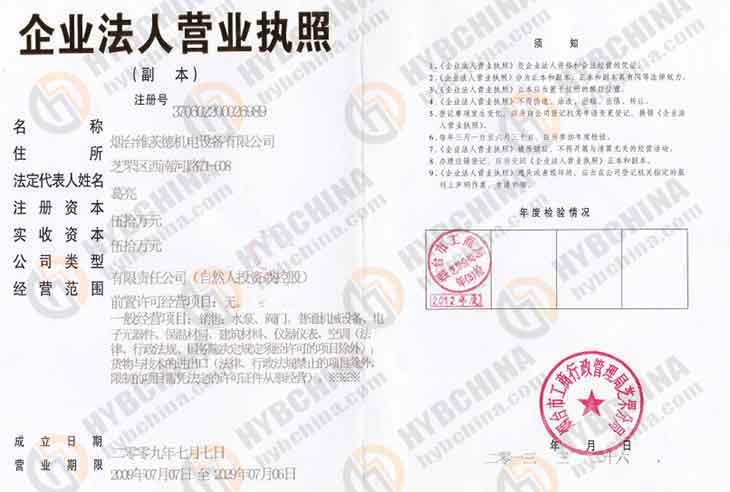
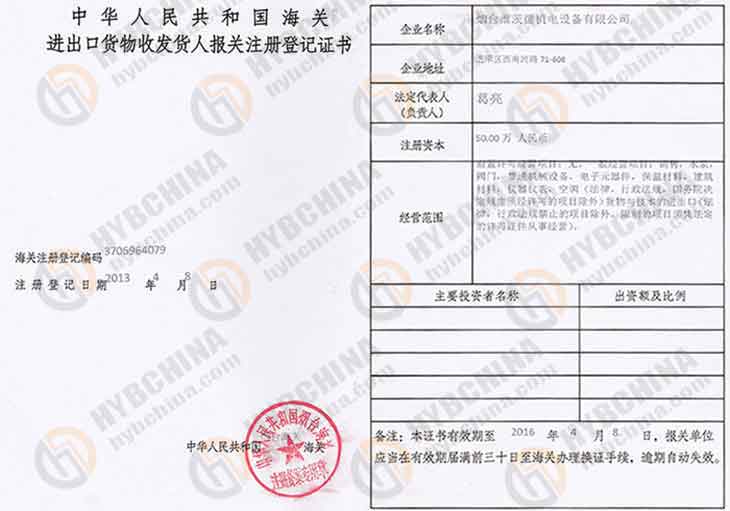
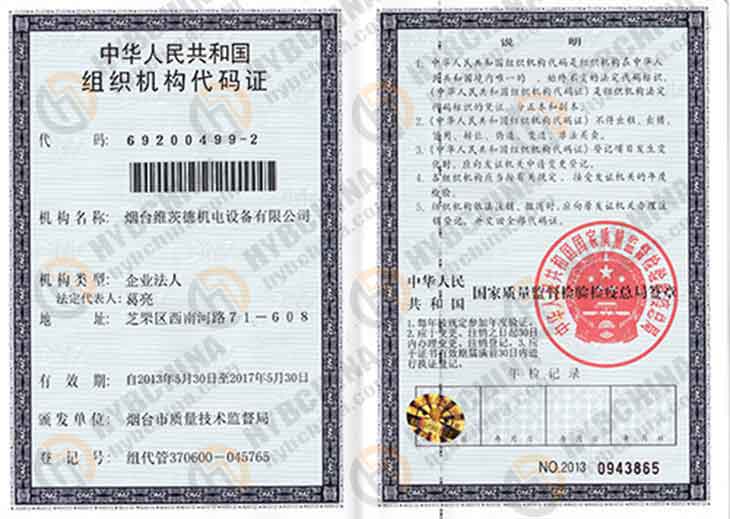
烟台维茨德机械工程有限公司,主要从事进口泵产品、进口阀产品、进口特殊电子产品为贸易技术服务的专业性公司。2005年被Ebara(中国)机械公司授权的北方技术、贸易服务公司。2007年被Pentair亚太部授权为山东区事务部,从事Pentair的通用进口原装泵、水处理设备的销售、技术服务工作。公司通过市场考察,从国外市场寻找了有一定技术的流体设备;如意大利Varisco的自吸离心泵、美国TACO通用泵及深水泵等优秀产品。
公司以水、能源、环境、技术、可持续发展五大运营模块为核心,努力为国内提供最优秀、技术最一流的流体、可编程升级电子产品服务。
烟台维茨德机械工程有限公司前身为烟台海达电子有限公司。海达公司主要从事电子产品设计、控制柜组装,是具有一定实力的一般纳税企业。因为公司从事进口产品运营的需要,公司股东建立了维茨德机械工程有限公司。
维茨德阐述
维茨德(WEETSD)代表了水、环境、能源、技术、可持续发展五个运营模块的核心内容,未来社会是要求环境与可持续发展结合的绿色发展的必须模式。我们正是秉承这个理念进行可靠、扎实的公司运营。
我们座落在美丽的海滨城市-烟台。在市中心、市开发区、机场附近设立了三点联络式办公场所。并有展示厅1个,合作组装车间,备件库一套。硬件是发展及为客户更好的服务的保证。
公司从成立以来,一直致力于原装进口产品的国内贸易及服务工作。期间代理合作了一些非常优秀的国外品牌产品。2005年,维茨德被中国荏原(Ebara)机械授权为中国北方Ebara通用泵、空调产品技术、贸易服务运营商。2007年,公司被美国Pentair亚太总部授权为山东地区泵、水处理系统营业事务部。2008年与意大利Varisco公司签单合作,从事自吸式离心泵、齿轮泵、螺杆泵的销售及技术服务工作。公司直接与日本本国制造商合作,在中国市场运营TOZEN产品、矽门阀组产品、与德国Seepex合作,从事螺杆泵中国市场的运做。与美国TACO合作,从事深水井泵技术、销售、安装服务。HAWE液压产品国内销售商。
公司在注重大宗产品运营的同时,还完善了其电子配件、机械密封等服务产品的运营模式。与全球第二大密封制造商AESSEAL合作,能做大进口设备密封常规48小时交货并应用,非常规密封7天交货并应用。
我们可以为您专业提供电子产品升级服务(如西门子模块产品升级)、提供空调、HVAC、供水等系统的PLC设计服务。
在广大国内客户的支持和信任下,我们将为您提供更高技术、更强专业、更完善的服务。